I
Income The Source
Start with what flows in. Income creates the opportunity. Structure influences the outcome.
Start with $100K. 5 rounds. No textbook. Just decisions — and consequences.
An interactive portfolio simulation developed by Mr. Victor Wong CFA · MSc (Fin. Eng.) · B. Bus.
— designed to teach wealth management through experience, not lectures.
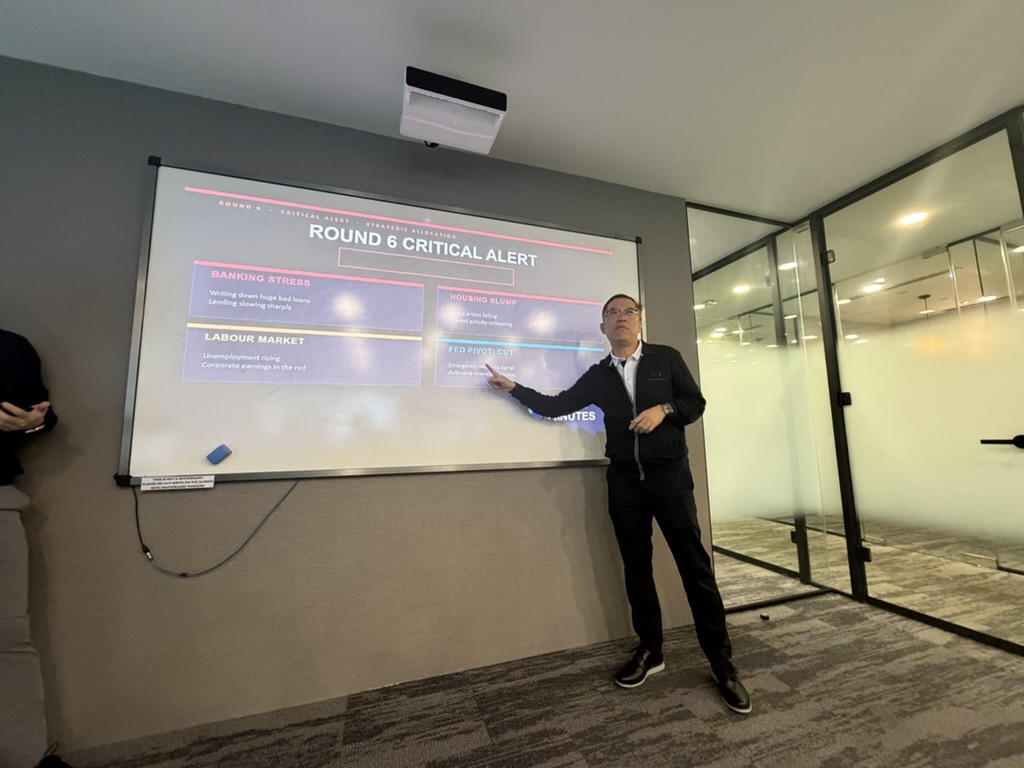
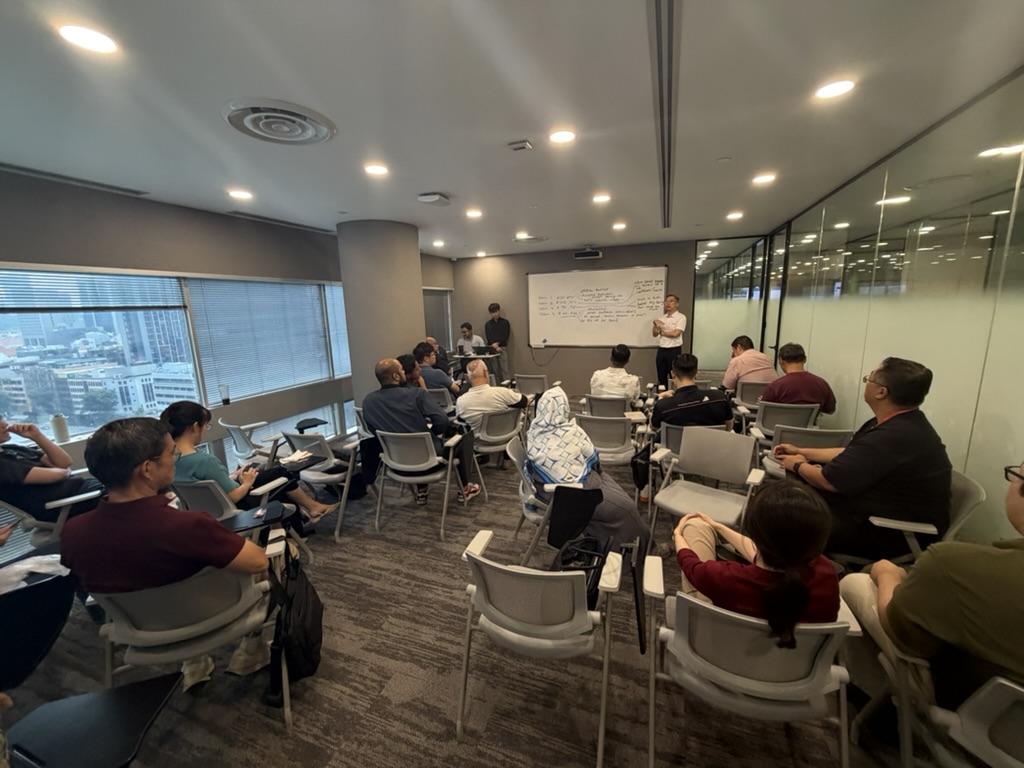


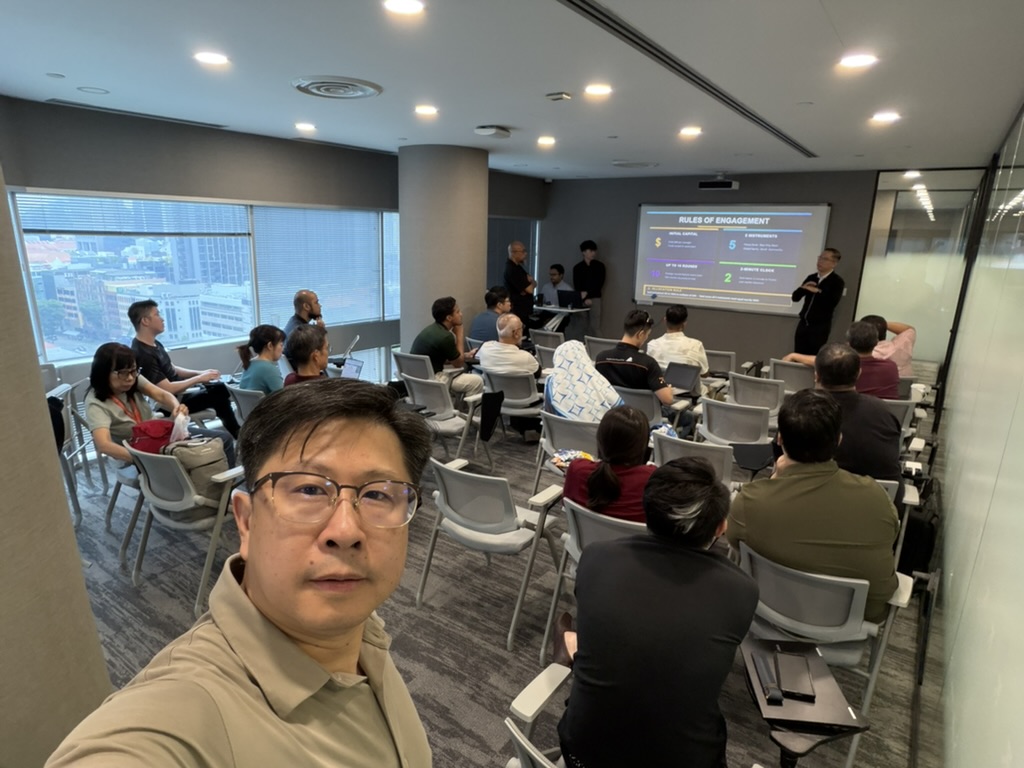
Five instruments. Five rounds. Two minutes each. Read the macro cycle, allocate wisely — and pray when fate takes over.
$100,000 per manager. Funds locked at round start. Your benchmark: $146,933 by Round 5.
Locked Per RoundPenny Stock · Blue Chip Stock · Global Equity Fund · Global Bond Fund · Diversified Commodity
0–100% EachStrategic rounds provide macro clues. Fate rounds rely entirely on chance — spin the Economic Scenario Spinner.
Strategy + LuckEach round: 2 minutes to finalise your capital allocation. All 5 instruments must total exactly 100%.
Multiples of 10%Every economic clue places you somewhere on this wave. Read it — then allocate accordingly.
When fate takes over, spin the wheel. The market dictates your outcome — no strategy, no guidance, pure chance.
System Overwrite · Pure Luck
Spin to determine the economic scenario for this fate round. The result is locked into the matching round of your scorecard automatically.
Penny Stock
Speculative growth
Sensitive to liquidity and confidence. Can surge in risk-on markets, then fall quickly when sentiment dries up.
Blue Chip Stock
Quality company
More resilient than speculation, but still tied to earnings, valuation, rates, and broad market confidence.
Global Equity Fund
Market participation
Spreads exposure across regions and sectors while still moving with global equity cycles.
Global Bond Fund
Defensive ballast
Helps steady portfolios. Prices respond to rate expectations, credit conditions, and safety demand.
Diversified Commodity
Real-asset exposure
Can behave differently from shares and bonds, driven by supply, demand, currency, and inflation.
Strategic rounds give you macro clues. Fate rounds hand control to the spinner. Navigate both to beat the benchmark.
Record each round as you play. Pick the economic phase, allocate across the five instruments in multiples of 10%, and watch your capital compound live against the $146,933 benchmark.
| Round | Economic Phase | Penny % |
Blue Chip % |
Global Equity % |
Global Bond % |
Commodity % |
Total |
|---|
Each round's return is based on your allocation and the prevailing economic phase, compounded round on round. For educational and entertainment purposes only. All returns are simulated.
At the end of 5 rounds, the portfolios tell the real story. Strategy beats luck — but luck can still destroy strategy.
High-volatility concentration strategy. Ignores macro signals — pure aggression. All-in on penny stocks during expansion. No hedging, no rotation, no defensive positioning when recession signals appear.
Macro-informed diversification strategy. Reads the economic cycle, rotates intelligently between instruments. Defensive positioning before fate rounds protects capital. Consistent compounding wins over time.
Straight answers from three decades of riding the market's cycles — the crashes, the recoveries, and the quiet years in between.
Because nobody learns risk from a textbook. In nearly 30 years I have never met an investor whose behaviour was changed by reading about a drawdown — only by living through one. The problem is that real tuition is expensive: the market charges you in actual dollars and lost years. A simulation lets you feel the sting of a recession spin wiping out two good rounds — the frustration, the urge to chase it back — at zero cost. That feeling is the lesson. Theory tells you diversification works; the game makes you regret not diversifying. Regret teaches faster.
The labels change; the rhythm does not. I have sat across from clients through the 1997 Asian Financial Crisis, the dot-com bust, SARS, the 2008 Global Financial Crisis, the COVID crash of 2020, and the inflation squeeze that followed. Every single one felt "different this time" while it was happening — and every single one followed the same arc: expansion breeds overconfidence, the turn punishes concentration, recovery rewards whoever kept capital intact. The six phases in the game are simplified, yes. But if you can learn to ask "which phase are we likely in, and what does it punish?" you are already ahead of most retail investors I have met.
Yes — and accepting that is half the battle. Nobody I know predicted SARS, Lehman's collapse, or a pandemic shutting the global economy in a single quarter. The spins are unfair by design, because markets do not owe you fairness. Here is what 30 years taught me: you cannot control the spin, only your exposure to it. The Allocator in our debrief does not win because luck favoured him — he wins because no single spin could kill him. When you cannot predict, you position. That is not a slogan; it is the only strategy that has survived every crisis I have worked through.
It is never the bad pick — it is the good run. The most damage I have witnessed always starts with success: a client triples money on a concentrated bet during an expansion, concludes they have a gift, and sizes up just as the cycle turns. That is the Gambler archetype, and I have watched it play out with penny stocks in the 90s, tech in 2000, property leverage in 2007, and crypto more recently. The instrument changes every decade; the behaviour never does. The second most expensive mistake? Selling everything at the bottom and waiting for it to "feel safe" — by which time the recovery has already paid out to those who stayed positioned.
Beating the benchmark with game money proves you understood the principle — that is genuinely worth something. But I will be honest with you, because that is my job: the game cannot simulate what real stakes do to your judgment. In the simulation, a recession costs you points. In real life, it arrives the same month as a retrenchment, a child's university fees, or a medical bill — and that is when even disciplined people abandon their strategy. The investors who compound over decades are not the ones who never feel fear; they are the ones with a structure that holds despite the fear. Build the structure before the storm, not during it.
Start with the same three questions the game forces on you every round. One: what economic phase are we likely in — and what does it punish? Two: if the worst spin landed tomorrow, which of my holdings would I be forced to sell at the wrong price? Three: am I rotating by discipline or by emotion? In practice this becomes an allocation across growth, defensive, and liquid instruments matched to your time horizon — reviewed on a schedule, not on a headline. That last part is where most people need a second pair of eyes. The game teaches the principle; implementation is where the next 30 years of your compounding gets decided.
Turning Income Into Reliable, Systematic Cashflow.
Built through intentional allocation, consistent investing and regular review.
Learning how wealth works is only the beginning.
The next step is to give every dollar a purpose.
ISAAC is a simple wealth structure that helps you see how income may be positioned across Safety, Accumulated and Accelerated assets, with the longer-term objective of creating future cashflow.
It is not about chasing the highest return. It is about building a structure where money can support life today, protect against uncertainty, grow over time and create more choices for tomorrow.
No detailed financial information is required. Estimated values are enough to begin.
Start with what flows in. Income creates the opportunity. Structure influences the outcome.
Protect what must remain available. Not every dollar should be exposed to uncertainty.
Build dependable value over time. Consistency can turn repeated actions into meaningful wealth.
Give long-term money room to grow through time, discipline and the ability to remain invested.
Give wealth a purpose. The goal is not only to own more assets. The goal is to create more choices.
Some money supports life today. Some money protects against uncertainty. Some money accumulates steadily. Some money is positioned for stronger long-term growth.
The Wealth Management Game explores the impact of compounding toward an 8% objective. ISAAC asks a different question: whether the allocation, horizon and level of uncertainty required are appropriate for the structure you are trying to build.
The Portfolio Alpha Challenge shows you how macro cycles destroy uninformed portfolios. Let Dr Chew help you build a real strategy that compounds through every phase of the cycle.
Portfolio Alpha Challenge was developed by Mr Victor Wong and presented by Dr Chew Hock Beng. Reproduction requires written permission.